A few weeks ago, I finished Aldous Huxley's dystopian novel, Brave New World. I decided to start reading another one of his books this week. It is very different from his previous novel- almost exactly opposite, in fact. In this novel called Island, the main character, John, is given a third option beside being exiled or participating in an "experiment" after he is caught by the government. In the novel, he is able to go to a utopian island where everything about society seems perfect. I know what you're probably thinking. This "perfect society" never seems to quite work out, does it? But somehow, this book seems different. There's nothing, at least on the outside, that would indicate that anything unusual is going on. In Huxley's original novel, society has progressed- and yet they seem to have taken a step backward. People in that society lived short lives, filled with a fake sense of happiness. They took drugs to escape the real world, and shortened their lives as a result. And they didn't have to think on their own, save for the seven world controllers.The constant indoctrination and violent drug use in the "Brave New World" is replaced with knowledge and learning in this island.
"World controller" seems like a big title, but in reality, even they have to follow the rules of the society they have set up. Mustapha Mond, the Resident World Controller for Europe, is one of the few people who actually knows what's going on. And he refuses to do anything about it. Mustapha Mond is actually very similar to Captain Beatty from Fahrenheit 451. Mond is well versed in literature from Cicero to Shakespeare and knows much about art and science. Himself a scientist, he knows that the world could be a place of freedom. He makes the argument, however, that such a world is not the best possible outcome. Instead, he is part of a massive organization that forces everyone to lose their individuality for a greater, utilitarian, ideal.
There are a few places in this fictitious world that have not yet been colonized by the World State, and this remote island is one of them. They live life completely separate from the rest of the modern world, and limit the use of technology. At first glance, the whole concept seems a bit simplistic, but by looking at the book under greater scrutiny, it is clear that Huxley put a lot of thought into his ideas. (If only he could have put the same degree of thought into his writing as well...)
I have not progressed very far through this book yet, but I suspect that there is something more sinister going on here in this seemingly utopian society. If everything is perfect throughout the book, there would be no way for a plot to exist. Unless, of course, the author just got lazy and didn't include much plot at all. I doubt that Huxley would do that, judging from his other famous novel. I think I'll have to read on to find out more about the story.
The great thing about mathematics is that if you use the same equation, you'll get out the same answer every time. It doesn't matter how many times it's used, or who is trying to use it. Well, from my recent literary exploits, I can confidently say that this is definitely not true in writing. Wait, I think I'm getting ahead of myself here. This week, I started reading Anthony Horowitz's new novel called Russian Roulette. It, for the most part, is the (fictional) autobiography of a man named Yassen Gregorovich, one who grew up with a miserable childhood and went on to become one of the most infamous criminals in the world. Seeing as the folks at Goodreads have already written a summary, I'll save you the trouble of reading another one here. When you first meet Yassen, he seems like an innocent little boy from a tiny village who has no idea how mean the world can be (His name is actually Yasha. It's a long story). When the existence of a covert biological weapons factory in the secluded Russian village of Estrov is leaked, the authorities are adamant that there should be no survivors. According to the official story, the village never existed. It was completely uninhabited. And there was no factory of any kind. Luckily, Horowitz saves you from the technical details and gives you a stunning first person narrative of the only known living survivor.
"Never tell anyone you came from Estrov. Never use that word again" (Horowitz 48).
Out of all the reviews you can read on the internet, the Guardian puts it the best. Their anonymous reviewer suggests that "Russian Roulette is a mystery, just like it's protagonist". This line essentially sums up everything that one can conclude when first picking up the book. Yassen is a person of so many contradictions that it is hard to decide who he truly is. Oh, but I forgot... I was going to tell you why the same ingredients can make very different characters. If you've ever read the original series of novels, you might recognize that their protagonist, Alex Rider, is remarkably similar to the elusive, yet haunting antagonist, Yassen Gregorovich. Both of them see their parents killed before they turn 15. Both of them have family members who are part of secret government schemes. Both witness the deaths of their family members, and both of them come to realize the terrible nature of the world after a horrible incident occurs. How did one of them become a hero and the other become the only antagonist to live for every book in the series? If you haven't read any of the books, you can think of it like Harry Potter and Lord Voldemort. They came from very similar situations, yet managed to receive their circumstances completely differently. After Yassen's best friend, Leo, dies of the biological weapons plant's disease after coming to Moscow he recounts that "In a way, I think I am writing this to Leo. I have decided to keep a record of my life because I suspect my life will be short...But I sometimes think of him and I would like him to understand what it was that made me what I am. After all, living as a boy of fourteen in a Russian village, it had never been my intention to become a contract killer" (Horowitz 70). The first thing that struck me about these lines was how humane he seems. After all, he makes money killing people! In these rare moments of insight, we are able to learn more about Yassen's character.
The train station where Yassen first arrives in Moscow
At the point I'm at in the book, Yassen is like a little time bomb waiting to explode. He has seen every thing taken away from him, and now he wants to get even with the society that has left him nothing. When he is captured by the authorities, he writes, "I made my first escape attempt that same day. I knew I couldn't stay here. I wasn't going to play any more of their sadistic games and I certainly wasn't going the swallow their food..." (Horowitz 165).
Afraid. Confused. Miserable.
Yassen has found himself in a world that cares little about the victims of the destruction of his village. In fact, it's nowhere to be found on any map. There is nobody who cares about his existence (save for the thieves that take his money). In fact, within a few short months, Yassen is robbed penniless and starved to weakness and kidnapped by a malevolent and corrupt business tycoon. I know you might be tempted to roll your eyes and dismiss this as another sad tale that ends badly- but this isn't that kind of story. You actually know from the start that the protagonist (or shall we call him the antagonist?) will live until the end of the book. And he will have changed. For the worse. Much worse.
That is where the uniqueness of this book comes in. We've all read books where bad characters reform themselves and the good ones die of sad deaths- but how many times do you see the very person you're rooting for throughout the story turn rotten on you? What a horrible trick, Mr. Horowitz. We've all seen our share of books and even more books that tell you not to read them. But this ingenious narrative certainly takes the cake.
The book trailer (first chapter only) is above.
This trailer is in no way representative of the book,
I don't particularly like the section on the blogging packet where you have to write the one book that you are reading. It makes the assumption that you are going to pick up one book, read it all the way through, and then start another one. And I tend to read about four books at the same time.
While I was reading Brave New World, I also started a drastically different book by Anthony Horowitz. Many of you might know Horowitz for his Alex Rider series- but his new novel, "Russian Roulette" is written for an older (high school) audience. This new prequel in the series diverges from the typical plot structure; it is mostly written in the first person, and rather than focusing on the child espionage agent himself, it details the life of Yassen Gregorovich.
Yassen is an interesting individual. He is a ruthless contract killer who was a primary and secondary antagonist for much of the original series. Yet, he comes off as strangely humane. The story begins as Gregorovich opens his laptop the day before the first book in the series, Stormbreaker. He inserts a flash drive- with multi-layer encryption of course- and begins to read his personal diary. It already sounds so strange that the most elite assassin in the world would keep a diary. But it keeps getting stranger. Yassen's personal tale begins with his life in a small Russian village where he witnesses his father, mother, and best friend getting killed by an outbreak at a biological weapons factory. Determined to keep the incident out of the news, the Soviet authorities attempt to destroy the village and all of its inhabitants. Yassen manages to escape with his friend Leo, who death is detailed by a dreadfully grim description.
Eventually, Yassen has to find his way in the city of Moscow. He is quickly robbed and tricked by a gang of local thieves, and feels that he has no hope left in the world.
I'm only about half way through the book, but I can easily understand why Horowitz took so long to write this novel compared to the original books. It's much deeper emotionally and plot-wise, along with its much higher level diction and syntax. In fact, the first person narration is so much better than his usual utilitarian style that I wonder why he didn't write all of his books this way. You can see the contrast within the first two chapters. The first is written in his traditional style with fast paced sentences, mounting suspense, and more allusions than you could possibly imagine. The second chapter is from the mind of Yassen Gregorovich, which gives it a sentimental and nostalgic tone. Here are two excerpts:
Chapter 1: "[The Guard] was quite a bit older than Yassen, probably an ex-convict recruited from a local prison. And he was scared. He tried to make light of it. 'I won't do that again!' he said. 'No,' Yassen replied. 'You won't'. The Beretta was already in his hand. He shot the man in the chest, propelling him backward into the darkness and the sea below. It had been necessary to set an example. There would be no further clumsiness that night." (Horowitz 11)
Chapter 2: "The real nightmare was behind me. It was almost impossible to think of my village and the people who had lived there. Mr. Vladimov smoking his cigarettes until the stubs turned his fingers black. Mrs. Bek, who ran the village shop and put up with everyone's complaints when there was nothing on the shelves. The twins, Irina and Olga, so alike that we could never tell them apart but was always arguing at each others throats. My grandmother. My parents. My friends. They had all gone as if they had never existed, and nothing would remain of them, not even their names. Never tell anyone you came from Estrov. Never use that word again." (Horowitz 48).
I'm not sure how the rest of the book will turn out, seeing as this is the first time Horowitz is trying out this new style. But so far, it's looking like it will be pretty interesting.
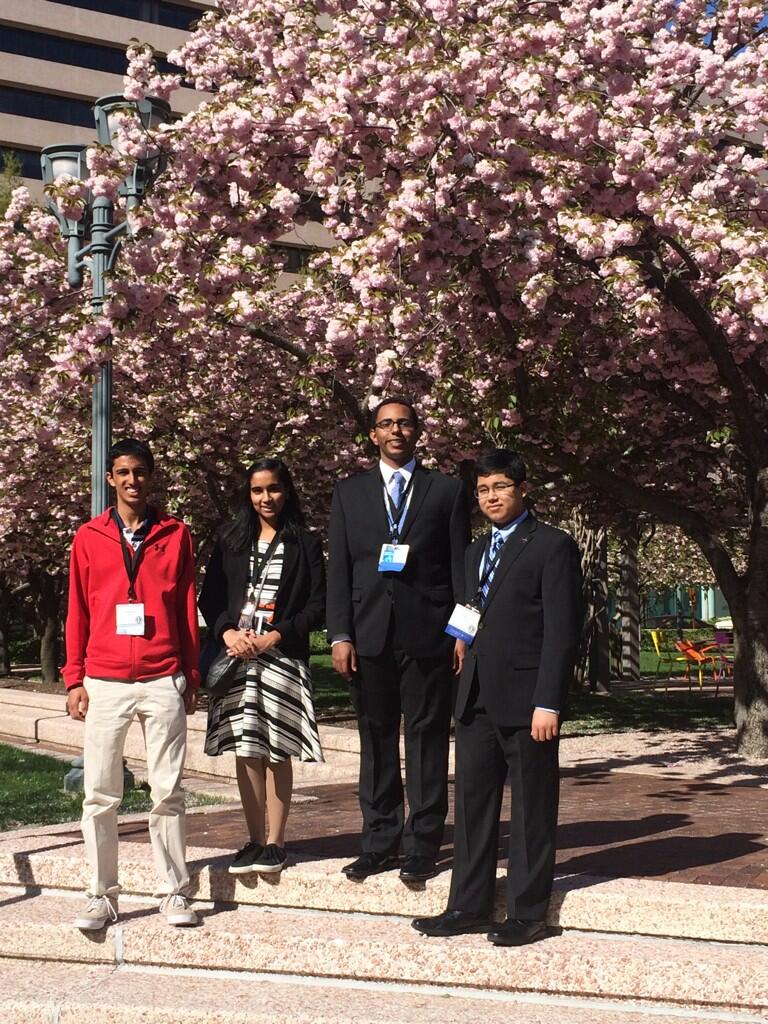
When I wrote my last blog post, it looked like I would finish my book this week. In my defense, I did make an attempt to read, but there were too many other things to do each day. Maybe I should give you some background first, since you probably have no idea what I am talking about. For the last four days, I have been at a national science competition in Washington D.C., presenting a paper alongside three other representatives from Ohio. I thought I could probably get most of my homework done on the first day, but we seem to have something to do every spare moment; government speakers (all of whom are described as "very special"), team building activities (at the end I don't think I even knew everyone's names), science festivals, paper sessions... you get the idea.
It's surprising how many people have this idea that we have invented everything worth inventing. They somehow buy into this concept that we basically know everything about everything and it isn't worth knowing anything more. Well, this competition really opened my eves toward how little we actually understand about the universe, and how much work still has to be done to help some of the poorest people in the world. In my book, Brave New World, the modernized world has completely ignored this part of the population, leaving them to live like the year is 1000 B.C., themselves living in a fake life in which they constantly give themselves a false sense of pleasure. You probably didn't see that connection coming.
Luckily, not everyone in the book is completely satisfied with this seemingly perfect life. Bernard Marx, one of the main characters, suddenly decides he wants to visit the "savage reservation" to see how they live. In this village, people become old, they get hurt, and have true feelings. They have children who are not part of a grand science experiment, and have no need for drugs to keep them afloat. When he sees this situation, he remarks that "I agree in the Savage in finding civilized humanity too easy, or as he put it, not expensive enough" (Huxley 159).
Unfortunately for Bernard, the government is taking notice. And knowing these kinds of books, I predict that by the end of the book, he will either be dead, brainwashed, or in a forced labor camp.
So far, this book has turned out to be interesting, but the characters just seem too underdeveloped. It's hard to really say who the main characters are until about half the book is over, and even these characters lack anything that makes you feel a connection towards them.
It's time to get on my plane back home, so I guess that's it for today.
There are a significant number of people who completely dismiss dystopian literature because it "wouldn't really happen". Well of course it wouldn't really happen. That's the point. Just because there may not be laws against the ownership of books, it doesn't stop Fahrenheit 451 from being relevant to censorship in our own society. And although there are no omnipresent telescreens watching our every move, 1984 is still relevant in our current condition of government surveillance. In the same way, Brave New World, by Aldous Huxley plays upon a single theme to create an interesting story of a society that wants to be controlled by their government. Each character individually may not have the same depth as realistic novels, but put together, they are a small version of the society itself.
Fortunately, it doesn't take a detective to figure out the theme in Brave New World. It's omnipresent, right from the first page. In their pursuit for a perfect society, this fictional government has made indoctrination through propaganda their way of staying in power. Huxley wants us to be aware that we should think for ourselves and reason even when an authority says otherwise. He wants us to be able to filter the information that we are fed to make a world that is better for everyone.
Just think about all of the mass advertising in the media that you encounter on a daily basis. When people are told something enough times, they start to believe there might just be some truth to that statement. We constantly consume media that spoon feeds us with the messages that will be beneficial to certain companies or political groups. You may wonder why nobody says a word against the government in Brave New World. After all, wouldn't someone have some sense within this society of chaos? Well, it's for the same reason that nobody says a word when we are being fed consumerist messages on a daily basis. It seems like everything is already perfect. Why disturb the order of society when everyone is happy with their situation?
This kind of fake happiness has engulfed the people of Brave New World. They love their easy life in which they do what they are told to artificially make themselves seem happy.
We tend to complain a lot about everything we have to do. But if everything was decided for us, life would be much, much worse.
Fahrenheit 451 presented a dystopian society in which books were banned. Compared to the society in the new book I am reading, Brave New World by Aldous Huxley, Fahrenheit 451 seems like a utopia. To put it into perspective, this novel was published in 1932- that's years before other dystopian literature such as 1984 and Fahrenheit 451. Huxley's world is startlingly similar to the place that our society is headed toward. It is a society where the universal government keeps its people slaves- but not through violence, intimidation, or laws. Instead, they condition children from birth to think in certain ways. They physiologically manipulate people in the factories where children are produced. Children are sorted into groups- from the smartest Alphas to the lowest Epsilons. These messages include consumerist propaganda, and ideas about each person's place in society. In fact, this future world worships Henry Ford and encourages activities that would be considered horrific in our own world. As the Director of Hatcheries states in the novel, "...at last the child's mind is these suggestions and the sum of the suggestions is the child's mind. The adult's mind too- all his life long" (Huxley 29).
I believe that this book is supposed to serve as a warning for what society could become if we do not stop greedy governments and corporations from controlling us and taking away are individuality. Huxley did not actually believe any of the things in the book would come true, but wanted us to know what could happen if taken to the extreme. I'm still just at the beginning of this book, but it is already intriguing and entertaining.
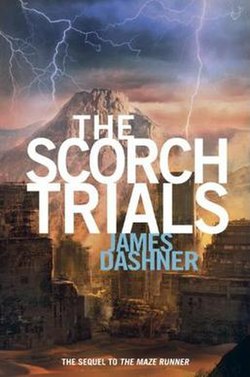
I am now completing the Scorch Trials, by James Dashner, and it has turned out to be a much better book than I had expected. The best thing about it is how the author creates suspense- at one moment you think you have everything figured out, and then suddenly that turns out to be a part of something much larger. Many authors often tell you everything you need to know about the characters and the world they live in right away. The Scorch Trials, however, diverges from this formula. Little to nothing is known about WICKED, the organization that is putting the two groups of children into a series of trials to test survival. The few times they are mentioned, people who claim to work for the organization explain that despite the evil sounding acronym, the organization has good motives and is the World in Catastrophe, Kill zone Experiment Department. Upon being "rescued" from the Maze trial, readers are provided with clues as to why the organization exists. They have something to do with a sun flare disease that slowly degrades people until they are no different from any other animals.
This seems strange though, and the sun flare theory might just be a cover-up for something more dangerous going on. There are several holes in the idea that sun flares can somehow give people a disease. First of all, the sun is more than 90 million miles from the earth and has no life at all. What if the WICKED organization truly is what its title describes it as? And what if they are trying to conquer the world by infecting its population? But how does that account for the experiments that are being performed?
Every new possibility in the Maze Runner series opens a new set of questions. I guess I just have to read on to figure out the answers.
In both the real world, and in most good fiction books, characters are shaped by the society they live in. This is a central theme in the Scorch Trials, by James Dashner. Although the book starts off with only 20 known characters who are going through a set of dangerous "trials", the group of children is able to come together and organize themselves to survive the ordeals. From the 50 characters who were placed in the Maze from the last book in the series, only 20 were able to survive. They were then removed from this and after one day of rest were placed in a second test of survival, an enormous flat dessert that gives the book its title.
Readers only get to know three main characters well; Thomas, Newt, and Minho. These three make most of the decisions and are respected by the rest of the boys. In the Maze, despite their young ages, the boys immediately form an organized society when placed in difficult situations. Each person has a job and a set of laws is made. This social structure withers away as soon as they are rescued and given their next task: to cross a 100 mile long scorching hot dessert.
The author, James Dashner, provides readers with several clues as to why this happens. First of all, the characters now know that they are part of a huge experiment, and have started to believe that their fate is pre-determined by the organization that designed the trials. As they are told at the start of the trials, "There are no rules. There are no guidelines... go one hundred miles north and make it to the safe haven" (Dashner, 60). Unlike in the maze, the objective has now been clearly spelled out. By doing this, the determination that the characters used to have has gone away, replaced with the feeling that they are going to perish anyway so they might as well not try to escape.
At the end of the book, I predict that at least some of the characters will manage to get out alive- how else would the author write the third book in the series?
Anyone who's read the Maze Runner knows plot is one of James Dashner's strong points. There are so many twists, turns, and complications that what you think you know one moment could be turned completely upside down the next. But with all of this story line planning it seems that some of the characters may have been forgotten behind. Indeed, many of the characters in the Scorch Trials lack the kind of depth experienced readers may expect, but they do each have distinct personalities. Rather than simply live, the function of each of the characters is to propel the story forward, and to do so the cast of characters one encounters while reading the Maze Runner series tends to be pretty large.
All together, a reader encounters the existence of more than 200 characters, but how many do we really get to know? Somewhere around 5 or 10. It becomes clear pretty quickly that each of these main characters are built around a specific idea, and they tend to stick to it. Only the main character, Thomas, is the lucky individual who is allowed to go through serious change.
Picking up right after the end of the Maze Runner (here is the Wikipedia version in case you've never read the book), we find ourselves among the few boys who survived the ordeals of the Maze. James Dashner quite literally stamps a description on each of their backs so that new readers won't be completely lost- each of the boys finds an identification number and descriptor that explains their role in WICKED's great experiment. That doesn't mean these descriptions are completely accurate though; they are just what the government members believed they saw in each one of the boys.
Immediately, things clear up when it comes to decide what to do. The survivors from the Maze find themselves starving in a room with people on the other side who have contracted a dangerous disease that virtually turns them into monsters. Each of the three main characters who are still alive, Thomas, Minho, and Newt, each want to turn to a very different course of action. The book explains that Thomas thought, "Maybe that door was locked for a reason... something felt wrong with this," (Dashner, 30) Thomas is the voice of reason in difficult times and wants to calmly think of the proper course of action. Minho on the other hand likes to act first and think later. As stated in Chapter 3, Minho wants to quickly find out what lies behind the room: "...they had to go out there and find some answers... 'I'll go first Minho said', and without waiting for a response he walked through the open door, his body vanishing in the gloom almost instantly," (Dashner, 31). Finally, Newt is a natural leader and takes command when encountering difficult situations. When the group finds that a new boy has mysteriously replaced a fellow Glader named Teresa, he is the first one to investigate what happened. Over all, the majority of the characters so far are round but fairly static.
As a final (off topic) note, this is the first time I am reading an e-book, which feels very different than having a physical copy in your hands. What do you prefer to read?
I recently started a new book, the Scorch Trials (sequel to the Maze Runner). I didn't really think that it would be the greatest book ever but I felt obligated to know more about the series than the online summary after reading the first book. Let's see if James Dashner has managed to make the Scorch Trials innovative with plot twists and character revelations that will make it unpredictable. It seems that every science fiction novel, save a few good ones, seems to follow a similar dystopian plot that drag readers into a similar formula.
((cliche flawed characters whose entire story can be described by one adjective) + (future that consists of an all powerful government) + (decomposed version of the US) - (any technological advancement) + (author who is writing a book for the first time))/(revolution and restructuring of society at the end of the book/series)) = 90% of science fiction novels published in the last five years
In fact, I still doubt that the Scorch Trials will divert from this at all. But why am I still reading it? It's like watching half a movie and then stopping and moving to do something else. (actually, as I recall, that did happen today). You only know part of the plot and you're just getting to know the characters- and then suddenly you are pulled out of the fictional universe and back into the real world. Reading the sequel to the Maze Runner will also let me know whether James Dashner had grand story arc planned for his entire narrative or did not know he would write a sequel until the Maze Runner became popular. I think it's going to be the second one.
As I just start the story, I know what to expect which is not very much- but hopefully my expectations will be exceeded. Anyway, the beginning is not all that promising. The "gladers" find themselves back in the actual world, next to a group of people who have just saved them and are now very sick. The Maze is a thing of the past... and now comes a massive desert. Honestly, could the author have been any less original? As far as I can see at the moment is like "The Maze Runner: level 2". (remarkably similar to the second hunger games book which for some reason is very well liked) According to an Amazon reviewer, "There are unexpected twists and turns in every chapter." I'm now on chapter 5 and I have yet to stumble upon a single turn I did not expect. The plot so far seems more like a ride on a train than a roller coaster. Maybe you shouldn't trust the Amazon reviews; probably a good number of them didn't even read the book. Switching out a few characters and changing the setting but keeping the plot the same does not seem very original to me.
Honors English 1b has arrived- which means new blog posts. I have not yet started on a new book, so in this post I will share some information about one of my favorite books from first trimester. This was Volume 1 in the Octavian Nothing series; the Pox Party. The author, M.T. Anderson diverges from his usual science fiction writing in this book and instead turns to historical fiction. Set in the revolutionary war era Boston, Octavian Nothing is a masterpiece in terms of historical accuracy. Grammar and writing conventions seem believable but not so much so that they are unreadable. It is the story of Octavian, a 15 year old African American , boy who is the unknowing centerpiece of a massive social experiment. He grows up in a mansion with dozens of scientists and philosophers funded by an old man named Mr. Gitney. Octavian is taught latin and can play the violin. He learns classical philosophy and is treated like a king. At the same time, he does not know the reality of his position. He is a slave of Mr. Gitney, who is attempting to prove that with education, Octavian can be as intelligent as any European child. As funding runs out, Mr. Gitney has to scramble for money- but can only find it in a curious man named Dr. Sharpe. Sharpe's motives undermine Octavian's good life and force him to do brutal work and ban his education. Eventually Octavian escapes, at which point the entire narrative unfolds. You can read more about the plot here.
As I explained above, one of the best parts of this book is how real everything seems. Part of the story has been "compiled" from Octavian's own accounts, while letters from other main characters make up an entire section of the book. As Octavian finds out his true fate, he is overwhelmed with emotion and torn pages and scratched out words help create the mood. Finally, advertisements and war posters create an atmosphere that makes the story seem right in place with its setting. Some in fact were revealed to be actual posters from the 1700s. Unlike many recent books, the reader is not bored with one single plot that seems to surround a single character. There are several important characters whose own stories are explored within the longer plot, and hints about previous mysteries in the book keep the reader interested. Although not all loose ends were tied up in the end, a sequel gives readers another chance to meet new characters while remaining under the same basic premise. As M.T. Anderson explains in his note at the end of the book, in a perfect world there would be a third book where all the characters come together and live happily ever after- but we do not live in the perfect world, and some of the best characters end up in bad situations at the end of the book. The Pox Party ends on a sad note- but leaves hope for the future.
I have now progressed in Feed, by MT Anderson, and gotten to know more about Titus and his friends. Unfortunately, the book did not completely live up to my expectations, but is still enjoyable to read. The main idea of Feed, is present throughout the story (which is a futuristic/satirical/dystopian novel that focuses on a "feed" in the brain that controls the characters' ways of life, turning them into foolish and illogical consumers). The language of the book, though, is unconventional. Unlike other science fiction books, it uses futuristic language to show how simple the characters' thinking patterns have become. For example, instead of saying that "the trip to the moon wasn't fun" a character might say "the moon like turned out to like be meg mal". This adds depth to the story, but gets annoying after only a few pages.
The main character in Feed is Titus, a teenager who represents what America has become. He goes to School™, yet cannot read. Titus is educated by corporate interests that tell students how to spend "wisely". He and his group of friends stand no chance to peer pressure, doing whatever is supposed to be cool at the moment. After meeting a girl named Violet who is trying to resist the feed, Titus realizes just how dull he has become. Titus subconsciously wants to change himself for the better, but is unable to with the sheer amount of advertising and propaganda that is thrown at him.
On the other hand, Violet is trying to actively resist the feed. She goes to hundreds of stores asking for random items, so she would be characterized "in a customer profile that just doesn't exist". Her efforts do not seem to be bringing about any kind of major change to society, but show how hopeless the situation is. With her father being a professor of ancient languages (modern programming languages), she has a very different view of the feed than most other people. Her father cannot afford an implanted feed, and talks in such a way that the feed will not understand him.
More than to advance a specific plot, the characters in feed represent a society saturated in perpetual product cravings. I look forward to figuring out more of the story.
Recently, I've been posting many repetitive posts about theme, characters, and analysis, so this post will be about new books that I want to read. If you think of any more good books, write them in the comments section.
At the end of the Maze Runner by James Dashner, (highlight for spoilers),the boys trapped in the Maze realized that it was created by a governmental organization to find people immune to the Flare. Thomas' friend is killed, and the boys believe that they have been rescued.The ending left many things unresolved and kept the reader in suspense. Hopefully The Scorch Trials will provide some answers as to the creation of the Maze and how Thomas is connected with it.
I seem to be the only person who hasn't read this series now, and although I know I am unlikely to think it is a well written book, I probably should read it anyway before having any opinions on the story. To me, the story sounds like it has a dystopian hunger games like setting with characters similar to most other young adult novels. I generally have a very negative opinion of most of the books in the current wave of dystopian fiction novels (which lack a logical or consistent plot, and contain unoriginal shallow characters), but maybe this book will not be as bad as it sounds. In any case, I don't want to be the only one who hasn't read this series.
Another fairly popular book, Gone seems to have an interesting concept. Everyone over the age of 15 suddenly disappears from a small town in California.Chaos rules over the children who don't know what happened. The descriptions I have read of it so far though are vague, so the I do not know exactly what happens in the book.
This week, I read the first few pages of Feed, by M.T. Anderson. The title is very ambiguous, so the first thing you should know that this book is not about the production of food for farm animals or giving meals to young children. It is a satirical science fiction novel about a group of people who live far in the future. They all have "feeds" programmed in their minds, giving them information, propaganda, and advertisements. During a completely "normal" trip to the moon, the main character, Titus, has to learn how to live without the feed and resist its control over human thoughts. Published in 2002, the novel predicts a future frighteningly similar to the technological advances we can see today. Google glass may be the forerunner of the omnipotent feed, turned to nefarious purposes by powerful entities. Of course, that will hopefully never happen.
I have read two other books by M.T. Anderson before, both about a boy named Octavian. (Their actual titles are remarkably long) Unfortunately, this meant that I had only experienced M.T. Anderson write in eloquent but ornamented 18th century English, and I was very surprised when the main character of feed talked with deliberately incorrect grammar and used the word "like" in about every other sentence.
I immediately noticed a text to world connection as I started reading. The "feed" in the book is very similar to a modern day technology such as Google glass. It can give the characters information and suggestions, and is filled with advertising. Soon enough, advertisers will probably figure out how to send location based ads to peoples' smart glasses telling the user, "turn right to find our amazing business which 6 of your friends have recommended". I also made a text to text connection to The Giver, by Lois Lowery. In that book, the government is also trying to influence peoples' thoughts, but by using external forces and not feeds inside the brain. I found that the theme of the books seemed similar, with both main characters rebelling against an oppressive regime that nobody else realizes is oppressing them. The primary difference though is that the Feed characters are influenced by an overwhelming amount of information while the Giver characters are influenced by a lack of knowledge. Finally, I made a text to self connection. Just like the main character, I don't enjoy being sold things by companies when they claim that you need to want their product because that's what other people want. This kind of advertising makes everybody feel that they are imperfect and their shortcomings could only be fixed with the new product.
As I continue reading, I predict that the main character will find other people to support his cause, but will not be able to make a substantial change in the society he lives in. There will probably also be more details, such as the advertising on the feed, that are based on real world things. Hopefully, Feed will turn out to be a good book.
I recently started Of Mice and Men, by John Steinbeck This is another "historical" novel like the one I previously read, but it is located in a much different place in the country and in society. The two very distinct characters are introduced from the first page. George Milton and Lennie Small are two men who are looking for work in rural California as ranch workers during the Great Depression. Lennie is a large man who has good intentions, has limited mental abilities. George and the other hand, is clever and street smart, but doesn't have much education. This post focuses on theme in Of Mice and Men.
Despite their major differences, the two main characters in the novel are friends. Although George can seem quick tempered and mean to Lennie, he eventually calms down and slowly explains the situation. This shows that one prevailing theme throughout the book is that even if people are different, they can still be friends. Although George considers dropping Lennie off at an aunt's house early in the book, he tells him to go away, and it is clear that he values his friendship. Lennie tends to forget things, makes mistakes, and uses simplistic logic, but George never abandons him. On the other hand, both men know that it will be impossible to achieve their goal of owning their own land, but keep working towards it regardless of this.
Another major theme in the book is that of loneliness. George and Lennie are unable to make any lasting relationships because of their occupation, and feel that there is nobody else who cares about them. George comments in the book on page 13, "Guys like us, that work on ranches, are the loneliest guys in the world." This kind of thinking makes George and Lennie very reserved around other people, unable to express their emotions.
Although Of Mice and Men may be an old and short novel, it still has many themes that apply today.
After reading for a few more days, I have now progressed in Water for Elephants. The book is has a different plot structure than most books, with the same character in different periods of time. Rather than reflecting on the story while telling it, Jacob, the main character, remembers the story exactly how it happened, and reflects on it later. In the nursing home, he always seems to feel that he was age twenty three and not ninety three just a few moments earlier. Their are many messages from the author that are directly stated and hidden within the text.
When the old Jacob is shown in modern times, there are many messages presented that are relevant to people and their outlook on society. Although Jacob has a very cynical outlook on life, he has some opinions that make the reader feel sorry for him. He accuses the nursing home staff of turning him into a "jello eating sheep" and also believes that by treating him like a balance of nutrients rather than a person, his humanity is slowly slipping away. This shows that people's happiness comes form their interactions with others, and that people can go insane when isolated from society.
Most of the time though, the author reveals theme and other main ideas through the younger Jacob's interactions with others. Although it is never directly stated in the book, by showing that Jacob took a risk by going to work at the circus without thinking about it earlier, the author shows how important decisions can shape the rest of your life. The author also suggests that it is necessary to take meaningful risks to be as successful as possible.
Comparing the two characters, a reader can see how a young and naive man could turn into a cynical person because of the actions they took. Jacob never talks to anyone in the nursing home about his experiences, but criticizes others when they do. Through the text, both the older and younger versions of the character explore the extremes of opposite personalities.
At this point, I am a decent way through Water for Elephants, and although I have yet to improve my opinion about it, I am determined to finish the novel. If you read my previous post, you probably know what this book is about- an old man vividly describing his experiences running away to work in a circus. Currently in the novel, it Jacob has befriended some of the more important members of the group and is well treated as the only ivy league educated veterinarian on the train. As other circuses close down as a result of the Great Depression, Uncle Al is acquiring their performers and property using both legal and illegal means. While reading, I noticed several connections in the book to other sources.
Firstly, I noticed that Uncle Al used clever wording to fool people into buying tickets to see ordinary things. By not telling lies (but hiding the truth) Al is able to sell costumers into seeing sights such as a "horse with a tail where it's head should be" (the tail was in the bucket of food). I found this similar to how products are advertised on TV. Exaggerated claims are made for these products that "are not available in stores" by using intricate language that cannot be claimed to be completely false. Only the unreadable fine print that appears briefly near the bottom of the screen reveals more to the purported revolutionary technology.
On another note, I was also able to make a text to self connection. In the narrative, Jacob finds that in the nursing home, everything is tailored exactly to suit his health, containing the right types of nutrients, along with preferences recorded for his daily schedule. Jacob is cynical but surprised about how much they know about him, and on page 106 says, "You'd think that they'd have my preference written down on my chart by now, but they ask me the same question every morning. Of course I would rather eat breakfast in the dining room." I sometimes feel the same way when using a website like Google. It seemingly knows everything about you, and already knows what you will type before you type it. Although it does help their product become better, it is intriguing how much information just one company can collect about you.
Finally, I thought that the narrator during the modern day section had a similar way of speaking as Nick in The Great Gatsby. Just like Nick, Jacob continually reflects upon the past, and finds it necessary to tell other stories before he can truly tell the reader what he wants to say. The English used is also similar- The Great Gatsby was actually written in the 1920s while Water for Elephants is a recent novel with a story happening in the 1920s.
After learning more about the main character, I still haven't grasped the extent of the plot yet. My prediction- as simplistic as it seems- is that Jacob will be able to train an elephant that was believed to be useless. This stems from the title, and the anger that he feels when someone claims that they "carried water for elephants". Along with that, one of the characters has been acting suspiciously, so it may turn out that he will become the primary antagonist.
Today, I started a new book, Water for Elephants, by Sara Gruen. I didn't know what it was about until I started reading the book, and I hadn't read the summary before I started either. The book, at this point, appears to be about an old man reminiscing about his days in the circus, but this website can probably tell you more than I can. The main character in this book is Jacob Jankowski, a ninety (or perhaps ninety three) year old man who is stuck in a modern nursing home in the current time period. Jacob is unwilling to accept his situation and cannot bring himself to realize that his life is slowly slipping away. A comment by another patient sets off a series of memories about his younger days. The author uses this part of the story to characterize Jacob and begin the plot and uses the older Jacob as a narrator. While in college, Jacob is suddenly struck with both of his parents dying in a car crash, and, with nothing to do, he hops aboard a train that happens to be part of a circus. From this point onward, he is part of the traveling circus. Although the story seems far fetched, it is written in a way that makes it appear more realistic.
As evidenced in the text, Jacob makes decisions quickly without thinking about their consequences. On page 24, Gruen writes, "I snap out of my stupor. There are people on that train. It matters not where they are going." This quote shows that instead of thinking over his situation and graduating from college, Jacob decides that he has to run away. After realizing the purpose of the train, he is quick to learn about working in the circus. Although he is appalled by the circus workers, within a day he is an employee of the "Benzi Brothers Most Spectacular Show on Earth". Jacob is able to make friends even in the hostile environment, showing that he can adapt to many situations. On his very first day, he has already made friends with an old circus worker and acts like he has been working in the company for years. Although his quick thinking sometimes lands him in sticky situations, it also saves his life. This can be seen in the following quote from page 56, when the leader of the group, "Uncle" Al, finds out about Jacob- "And pray tell what does Jacob Jankowski think he is doing on my train?... I've seen your sort a thousand times." Instead of being thrown out of the train like others would, Jacob manages to convince Al that he could be useful since he has a partial degree in veterinary medicine which would enable him to care for the animals on the train. From just the first few pages, it is clear that he will have to change significantly to propel the plot forward.
So far, it seems like Jacob will turn into a round character, as he is already described well in multiple points of view. I'm not sure if this book will turn out to be any better, but regardless of its plot it has great characterization for the main character. Many instances in the story give details unnecessary for the advancement of the plot, but re-enforce the character of Jacob.
This may be the longest time I've taken to finish such a relatively short (350 page) novel, but here it is again: this time I'm looking at theme in Robopocalypse. I was surprised by the end of the book, and there was an unexpected twist that led to the expected victory. The plot was suddenly brought together by an array of sources, and the main characters group is able to form an alliance in an entity that noboy would expect. This made me give it a good rating on goodreads... and caused me to think about its theme.
The theme of the novel is both explicitly stated and implied by the author, and is constantly developing until the very end of the novel. You get a taste of the theme in the very first chapter, in which Cormac Wallace states,"We are a better species for having fought this war." What he means by this is not only that people learned many lessons after fighting their own creations, but in a broader sense that people need to stand up for what they believe in, especially even in high pressure situations. From the war that ensues throughout the story, we can learn that when people are not mindful of their acts, they can unknowingly opress groups of society that feel they need to retaliate. Although the Dr. Nicholas Wasserman, who created the self aware robot Archos, was minutely aware of its implications, he was careless and let the technology spread to machines and robots of all kinds, from household appliances to military machines. Society too, in the novel, does not realize that by depending on their robot helpers for everything they do, they have given this group of beings a reason to be angy and to retaliate. These robots feel that their self awareness puts them on par with humans, and do not want to be treated like ordinary machines.
Towards the middle of the novel, a second theme emerges. Each seperate group of people thinks that they are only trying to survive, and will not be able to help humanity, but ends up contributing in a large way. This shows that although actions can seem small, when they compound they can result in change on a massive scale. A quote that supports this, from page 132 is "The Osage Nation never turned away a single human survivor... As a result, Gray Horse grew into a bastion of human resistance" Although this small community in the book starts out with only a few badly equipped people, by taking small steps to find other survivors, it is able to grow into a large power in the emerging plot.
If you do decide to read this novel, you will realize that Daniel H. Wilson has put a lot of thought into not only the scientific aspects of the story, but also the literary and philosophical aspects of it.
Now almost finished with Robopocalypse, I can now see how the author Daniel H. Wilson has fully developed the story's characters over the course of the narrative. (If you don't know what this book is about take a look at my previous post) Unlike most novels which only have one or two main characters, Robopocalypse has an abundance of equally important characters whose stories are told in short chapters scattered throughout the novel. Now, most authors would be unable to pull off such a feat, giving depth to no less than seven main characters without even a continuous flowing story, but Daniel H. Wilson manages to do it flawlessly. In themselves, each of the characters does not appear to contribute much more to the plot, but when their stories start intertwining, you can see that they have propelled the plot forward. It is not the plot, but the characters that are the most stunning part of this novel. Without them, the story could be reduced to about one sentence like this one: 'Various tactics are employed by humans to end a war in which robots have decided that the only way to preserve the earth is to end humanity.'
Perhaps the most important main character is Cormac Wallace, who also happens to be the narrator. The plot is almost reverse: the ending is revealed on the first page, but how the story got to that point is the subject of the next 400 pages.Wallace is a clever but ordinary man who has joined the army. He can seem unsophisticated at times, spewing out cuss words, but he is actually given a deep personality by the author. At first, Cormac seems afraid of the conflict, and stays in the shadows of his courageous older brother. You can tell he's never even seen a conflict of this proportion, and doesn't know what to do. As quoted from the novel, Cormac states, "Here it is, the day before Thanksgiving. The day it all happened. My life up until now was never that great, but at least I was't being hunted. I never had to jump at the shadows, wondering whether some metal bug was about to try to blind me, sever one of my limbs, or infect me like a parasite." (Wilson 159)
After losing his older brother though, Cormac is left by himself, and has to change his ways to survive. He slowly develops into a more courageous and fearless leader who is ready to do whatever it takes to destroy Archos, the master robot. At this point in the novel, Cormac realizes that although he may die, his actions could help the billions of other humans survive. He no longer tries to only keep himself safe, hiding behind the shadows, but joins with other people he instinctively knows he can trust. As Cormac Wallace comments at the end of a chapter, "I assumed control of the squad that day. After the death of Tiberius Abdullah and Jack Wallace, the squad never again hesitated to make any sacrifice necessary in our fight against the robot menace." (Wilson 306)
From just this one character out of many important ones, it is easy to see that Daniel H. Wilson put much thought into the development of dynamic characters.